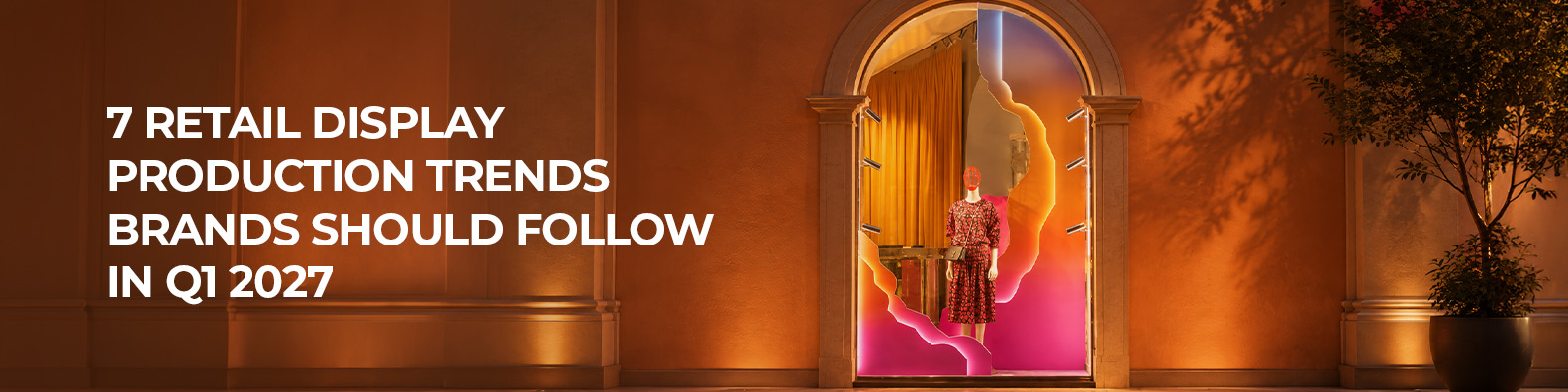
7 Retail Display Production Trends Brands Should Follow In Q1 2027
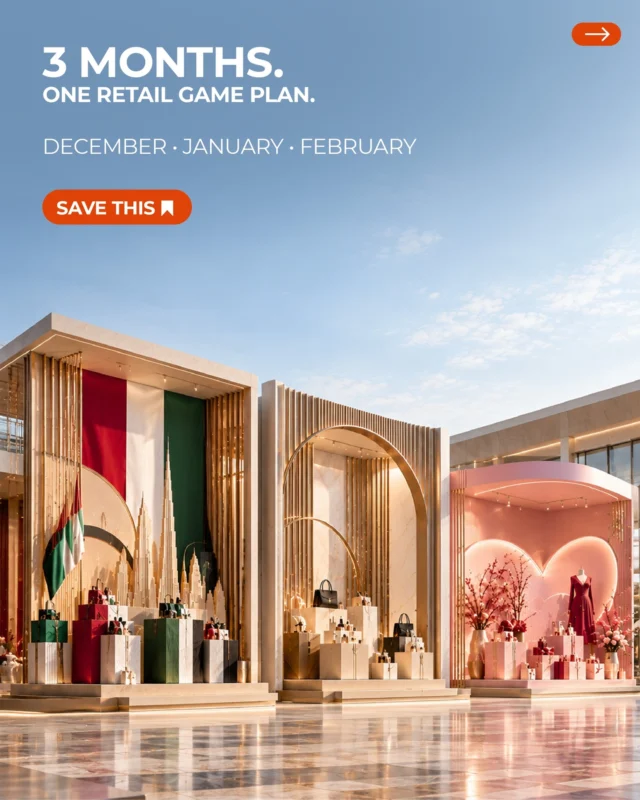
A window may need to introduce a new collection in January, carry Chinese New Year gifting in early February and welcome Ramadan two days later. The structure might stay in place, but its lighting, graphics and product story need to keep moving.
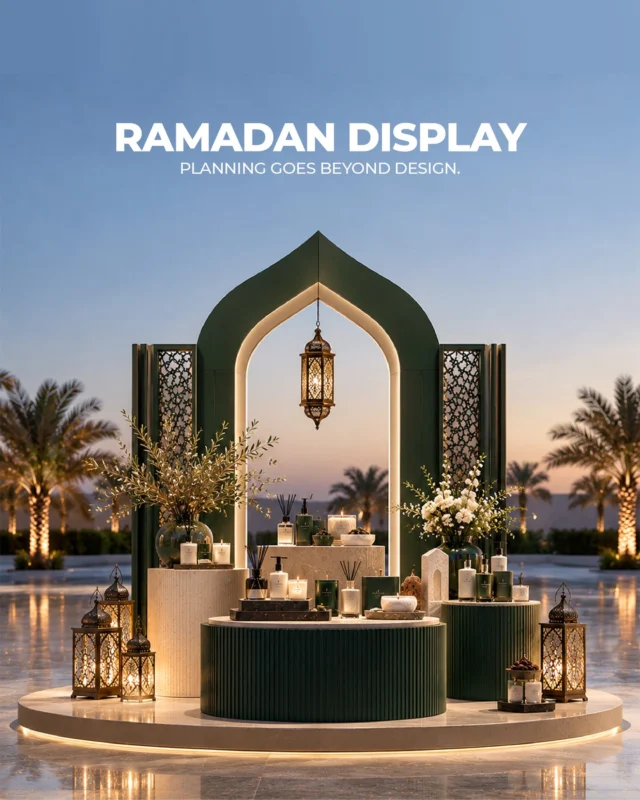
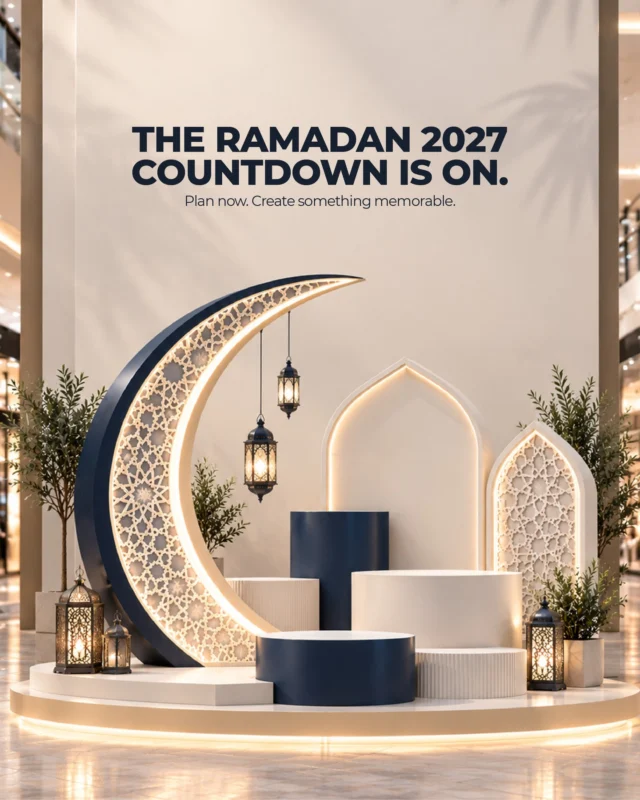
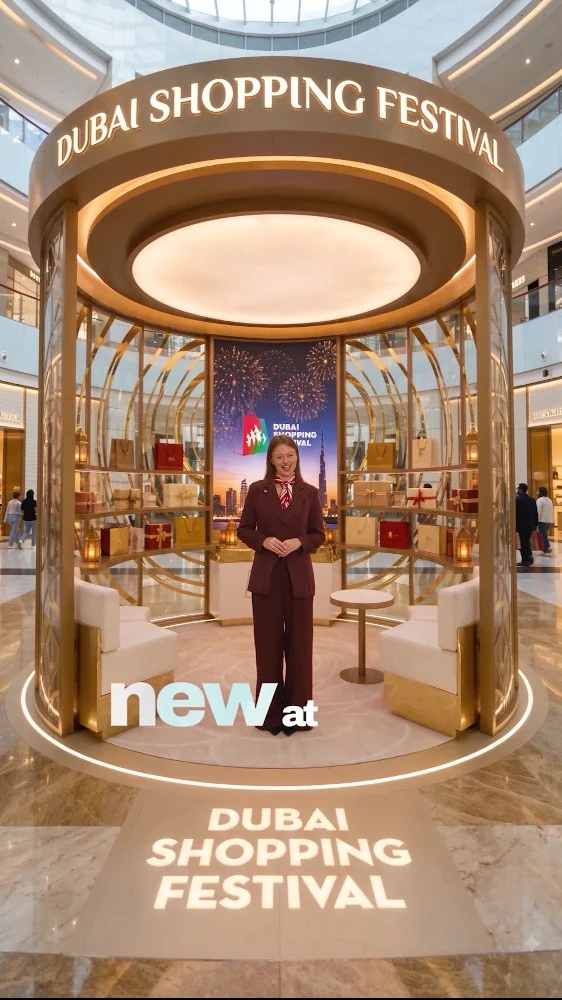
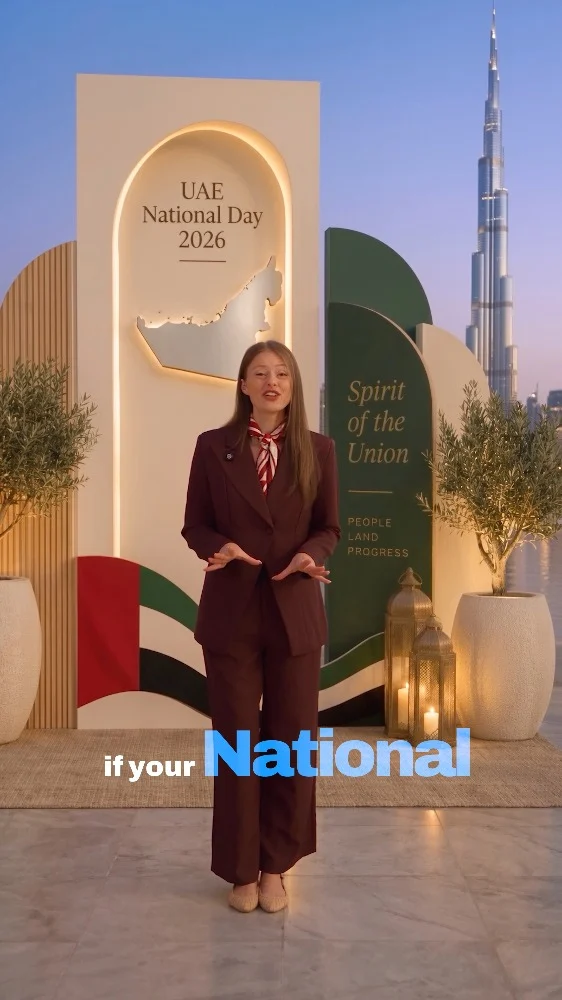
That is the production challenge behind the Q1 2027 retail calendar. January brings New Year window resets and the sale-to-new-season transition towards the end of the Dubai Shopping Festival season. Chinese New Year follows on 6 February, with red-and-gold windows and gifting for travellers. Ramadan is expected to begin on 8 February, shifting attention towards evening-led displays, lanterns and crescents.
Valentine’s Day on 14 February falls within Ramadan, calling for subtle gifting moments within the wider seasonal creative. Saudi Founding Day on 22 February brings heritage-led displays across stores and malls in the Kingdom, followed by an overnight transition to Eid celebration and gifting around 9 or 10 March. Ramadan and Eid dates remain subject to moon sighting.
For brands across the UAE and Saudi Arabia, four major occasions fall within six weeks, alongside Valentine’s Day. The retail display trends shaping this period therefore need to do more than introduce a fresh look. They need to help teams deliver experiences, change campaigns and reproduce detailed designs within a demanding schedule.
7 Trends Shaping Retail Display Production In Q1 2027
- Give people a reason to stop with retailtainment.
As malls become social destinations, displays are expected to entertain as well as present merchandise. An atrium installation, walk-through set or kinetic feature can become something visitors stop for, film and return to.
The shift is particularly visible in Saudi Arabia. According to Arab News, nearly half of mall space is now planned for entertainment and other non-retail uses, while Riyadh mall occupancy reached 92% in Q1 2025.
For production teams, this changes the scale of the brief. A feature designed to attract a crowd needs its structure, lighting and safety sign-offs considered around that interaction. The planning should account for people gathering around the installation as well as shoppers moving past it.
At Team Visual Solutions, our capabilities in theme park installations, fibreglass sculptures and large atrium builds support this approach. The creative idea and the way people encounter it need to be developed together.
- Design physical fixtures and digital content as one composition.
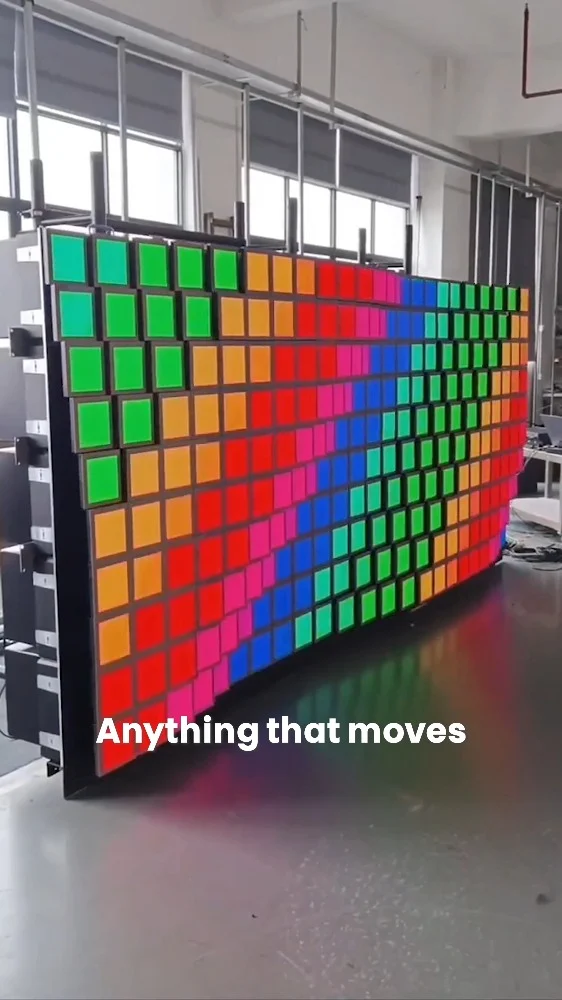
Shoppers move between online and in-store experiences with little separation between the two. Retail displays increasingly reflect that behaviour through LED panels, screens and QR-led content integrated into physical fixtures.
For Q1 2027, one structure could carry Chinese New Year, Ramadan and Eid content in sequence. That flexibility becomes more useful when the digital elements are included in the original design.
Start by agreeing screen dimensions and content requirements with the creative agency. Then resolve concealed cabling, ventilation and maintenance access alongside the joinery and metalwork. A screen that fits the front elevation still needs room behind it for the systems that keep it operating.
TVS brings electrical work, joinery and metal fabrication into that process, allowing the fixture to be built around the screen and LED requirements from the outset.
- Make duty free gifting visible from the walkway.
Travel retail remains a significant opportunity for seasonal displays. According to TRBusiness, Dubai Duty Free reported record sales of Dhs8.68 billion, or US$2.38 billion, in 2025. That represented growth of 9.85% year on year, with perfume its largest category at 18.45% of sales.
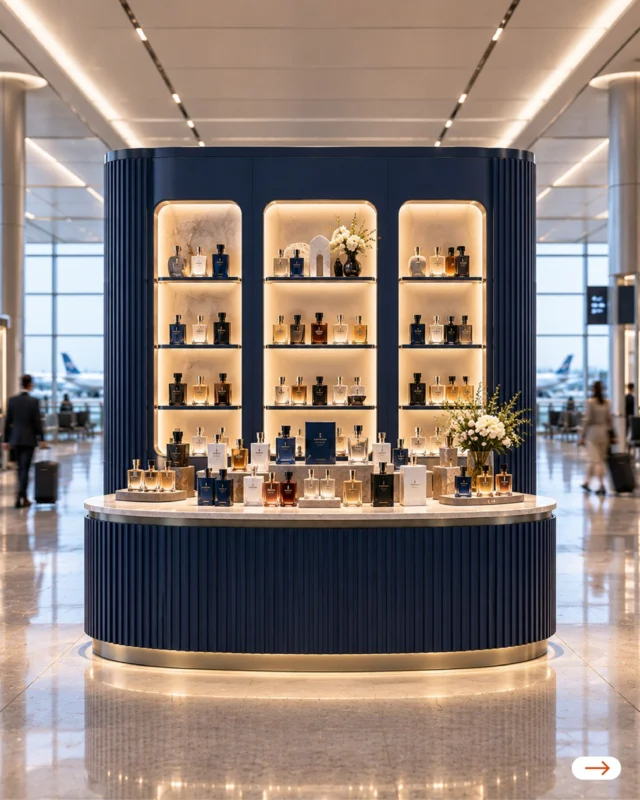
For brands, those figures give particular weight to fragrance and gifting presentations. Hero gondolas, fragrance walls and gifting towers need to communicate clearly while travellers are moving through the terminal.
The production requirements are equally specific. Fixtures must meet airport fire and electrical specifications, while installation needs to fit overnight working windows. These conditions should shape the build before fabrication begins.
Q1 also brings three gifting peaks: Chinese New Year, Ramadan and Eid. Plan replaceable graphics around those transitions so the display can carry each campaign without requiring the entire structure to change. TVS supports this through duty free displays, fit-outs and overnight installation.
- Use precision fabrication to repeat detailed designs across stores.
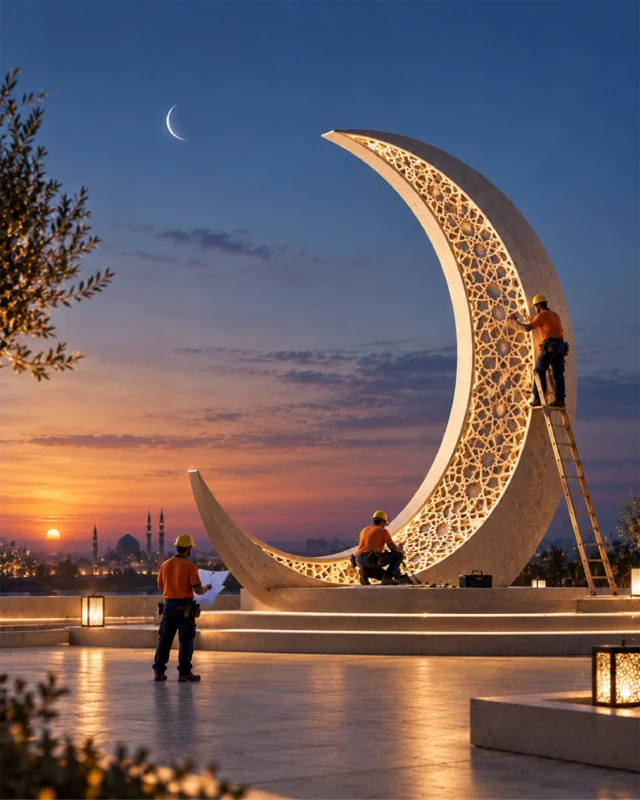
A sculpted lantern may need the character of a crafted object and the consistency of a coordinated rollout. Reproducing that appearance across 20 stores places different demands on production from making a single feature.
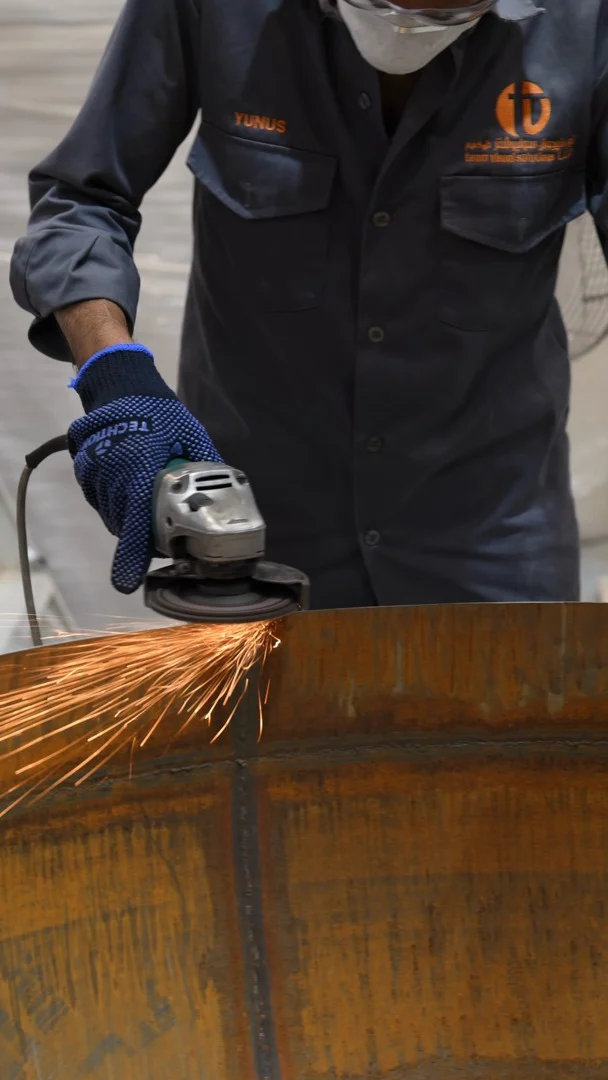
Robotic carving, CNC milling, fibre laser cutting and 3D printing allow complex forms to be produced accurately and repeatedly. They open up possibilities for custom geometry while reducing the lead-time and consistency challenges of making every unit by hand.
Consider perforated metal screens, sculpted lanterns or detailed 3D-printed components. Their value lies in both the individual shape and the ability to reproduce it reliably across locations.
At TVS, a KUKA robotic arm, CNC milling, a Bystronic fibre laser, 3D printing and vacuum forming support this work. The production method becomes part of the design conversation, helping establish how a detailed concept will translate across the full quantity required.
- Approve statement finishes under the lighting where they will be seen.
Retail surfaces are becoming a larger part of the visual experience. Brushed and mirrored metallics, backlit acrylic and fibreglass sculpture introduce depth and texture, while patterned treatments such as hydro dipping carry a printed design around complex three-dimensional forms.
These finishes can give a display a distinctive presence, but their appearance needs to be judged physically. A metallic sample viewed on a screen offers limited guidance on how it will behave in a brightly lit mall atrium.
Request finish samples during the concept stage and review them under store lighting. Backlit elements and reflective surfaces deserve particular attention because illumination can change how their colours, textures and reflections are perceived.
At TVS, our in-house finishing capabilities include painting, powder coating, hydro dipping, UV flatbed printing, glass lamination and upholstery. Bringing those processes into the discussion early helps connect the intended appearance with an approved production finish.
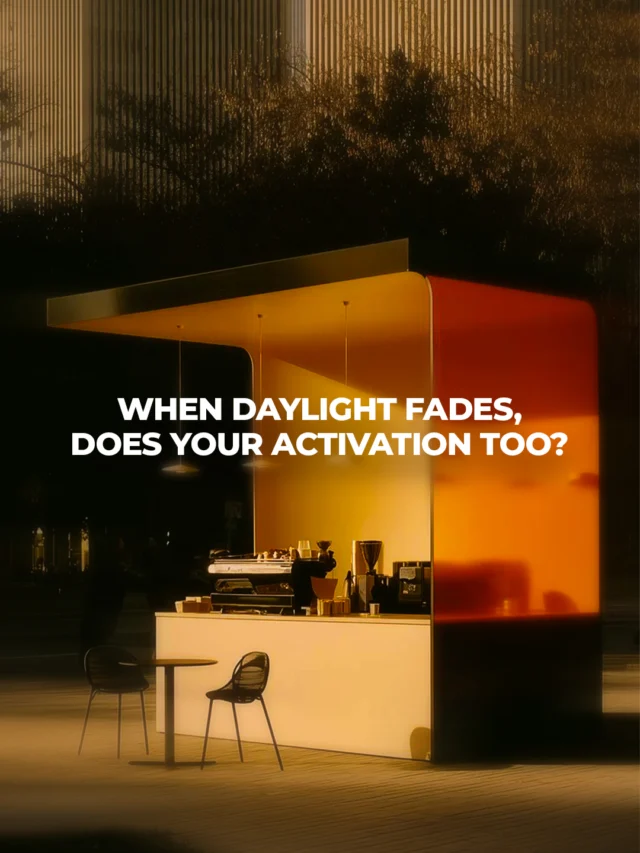
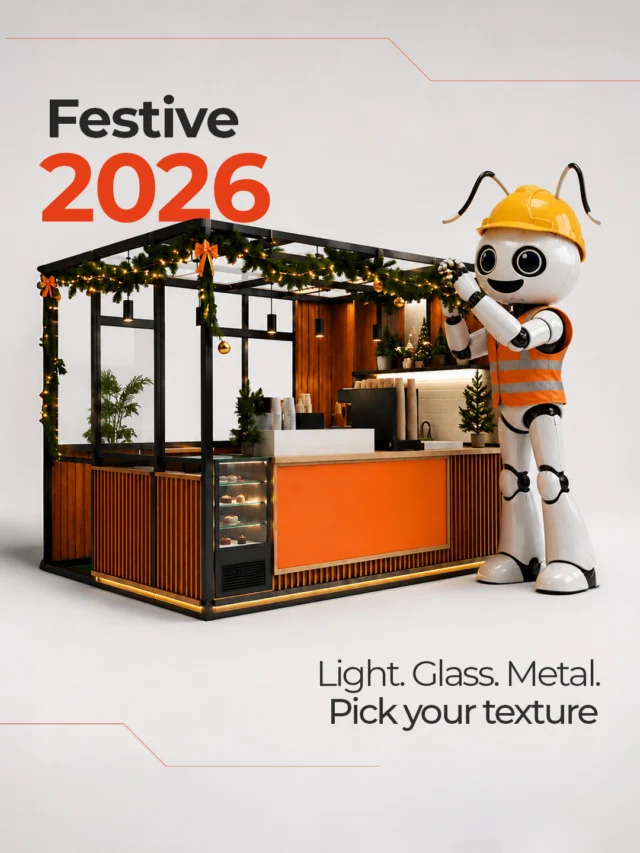
- Build pop-ups and kiosks around short seasonal windows.
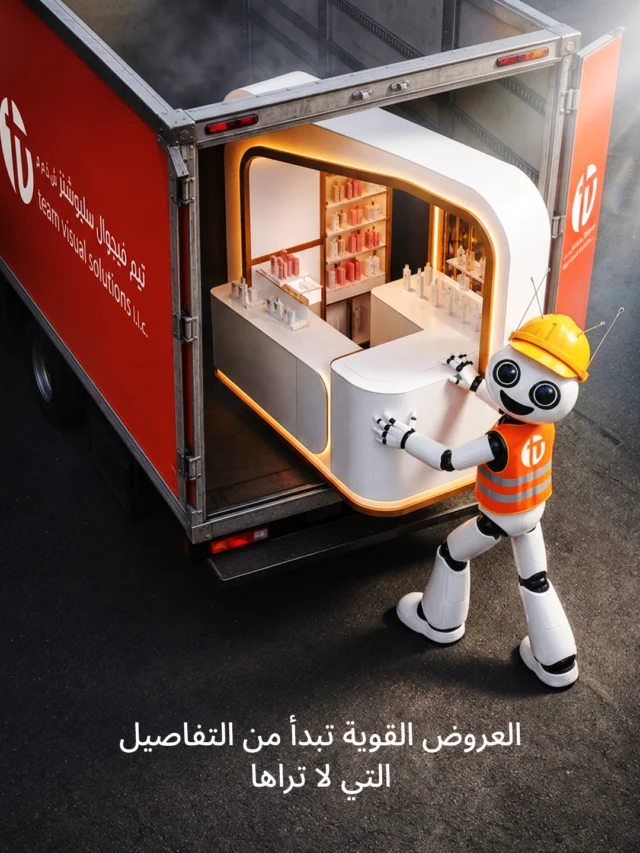
With four major occasions within six weeks, short-run pop-ups and mall kiosks give brands a way to introduce limited editions for individual campaigns. Their success depends partly on how quickly they can move into and out of the space.
A unit may need to arrive pre-wired, be assembled overnight and be removed just as efficiently. Integrated lighting and storage should therefore be resolved within the kiosk design.
For multi-city rollouts across the UAE and Saudi Arabia, flat-pack shipping is another production consideration. The unit needs to travel efficiently and arrive ready for the planned assembly sequence.
One production partner coordinating installations helps connect these decisions across locations. At TVS, custom kiosk and pop-up production is supported by delivery and installation across both markets, keeping the build and site requirements within the same project scope.
- Build regional identity into every detail.
Saudi Founding Day, Ramadan and Eid each carry cultural meaning that deserves attention in the creative process. Arabic typography, regional patterns and heritage references can give a display a stronger connection to its setting when they are selected and reproduced thoughtfully.
That care begins before fabrication. Involve cultural reviewers early, avoid sacred text as decoration and assess how calligraphy or geometric detail will translate into the chosen material.
A pattern approved as artwork still needs to be reproduced accurately in metal, acrylic or print. The fabricator’s ability to retain that detail is part of the final result.
Our in-house design, 3D visualisation, acrylic fabrication and metalwork support the development of these elements. Cultural review and production planning should inform the same design, giving regional references a considered place within the finished display.
Conclusion:
Q1 2027 asks retail displays to perform several roles within a short period. They need to attract attention, accommodate digital content, support gifting and move between campaigns while retaining the detail of the original design. Those ambitions become more achievable when production decisions begin alongside the creative work.
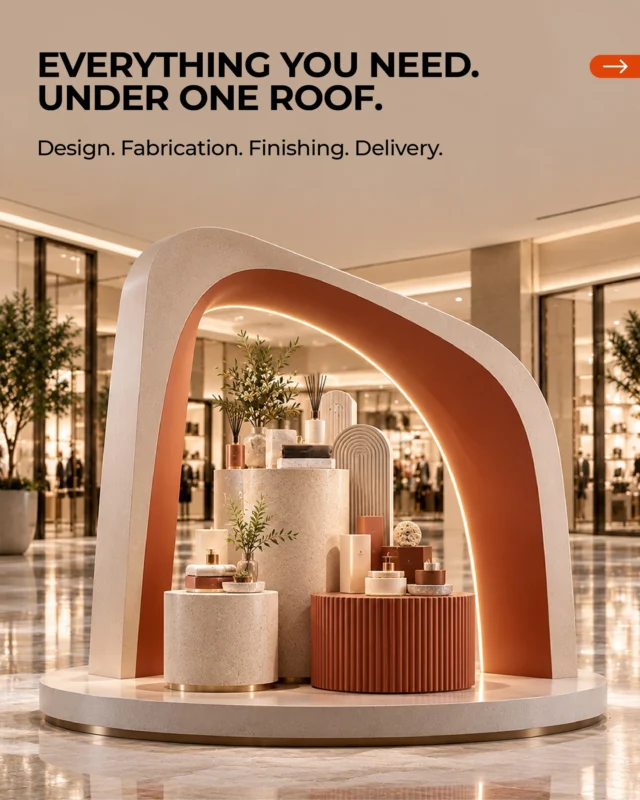
At Team Visual Solutions, we bring design, manufacturing and installation together for brands, malls and duty free operators. Founded in 2010, TVS operates from a 65,000 sq ft facility in Dubai Investment Park 2, with operations in Riyadh since 2022. We are ISO certified (2021) and have a team of more than 255 people.
Brief your Q1 2027 display production by November 2026 to allow time for approvals, fabrication and installation ahead of Chinese New Year and Ramadan. To discuss your project or request a quote, call +971 4 884 9405, WhatsApp +971 52 778 1260, or email info@teamvisualsolutions.com.