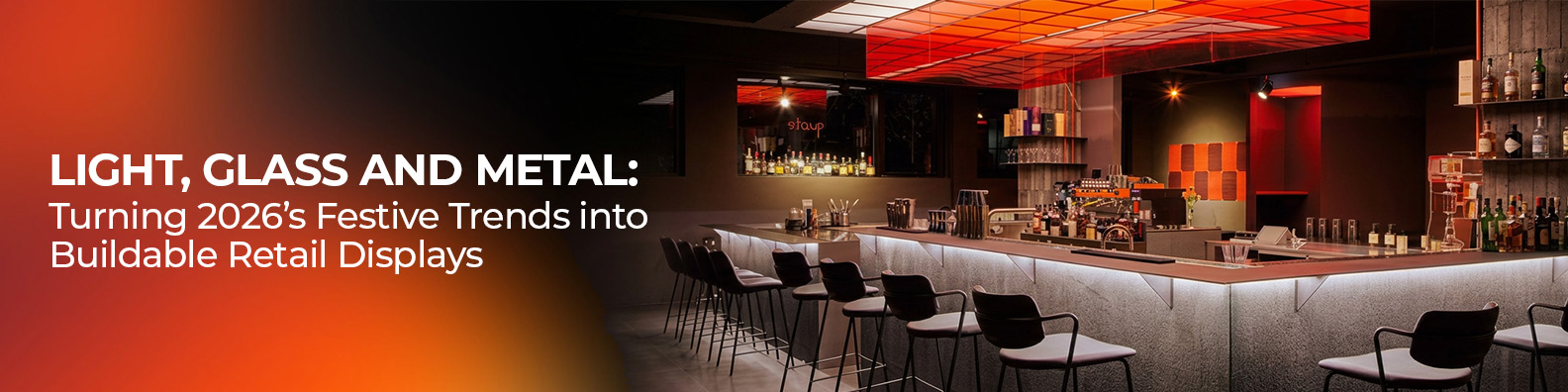
Light, Glass And Metal: Turning 2026’s Festive Trends Into Buildable Retail Displays
Every festive season brings a new visual direction. The on-going trends give retailers a fresh way to make the familiar feel surprising..
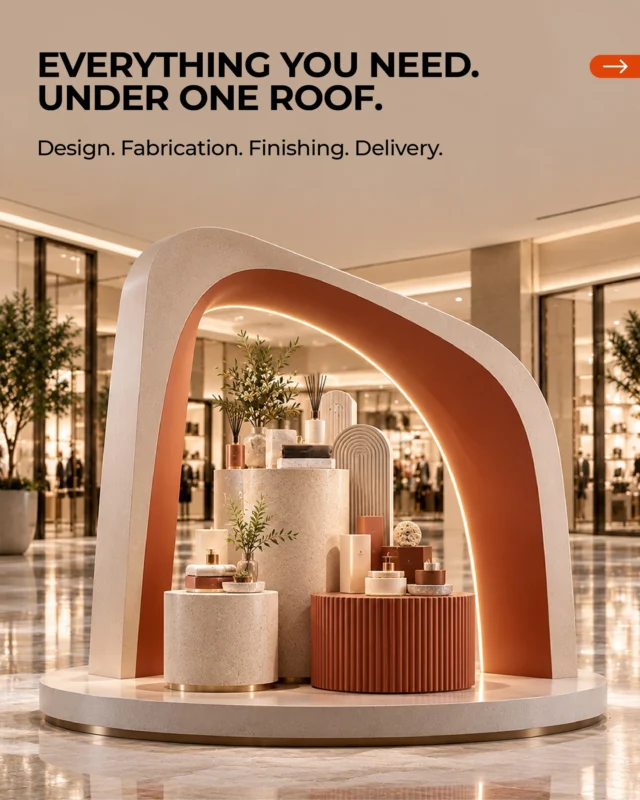
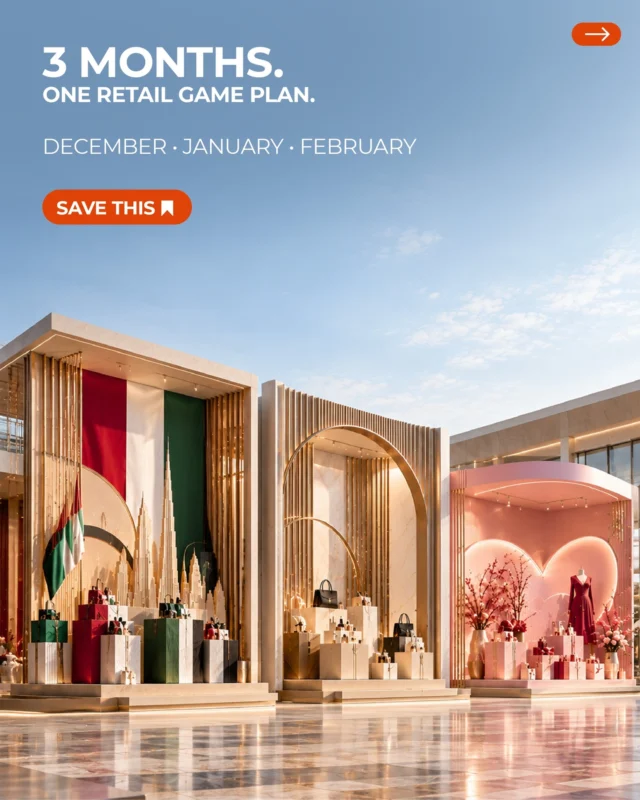
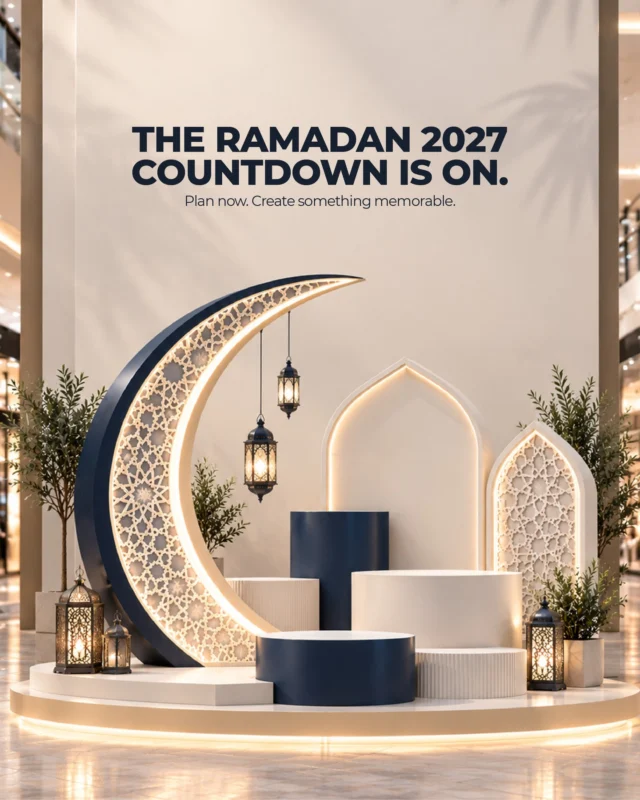
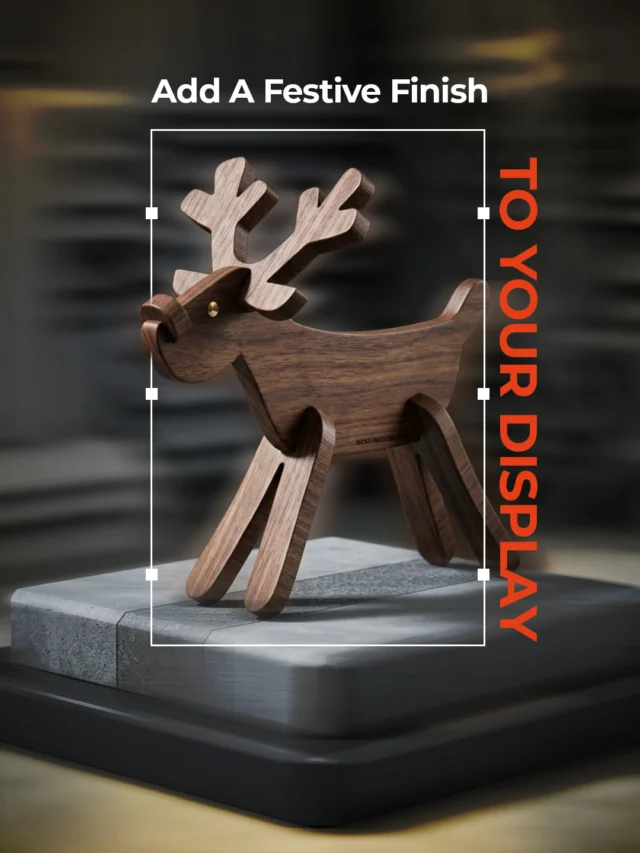
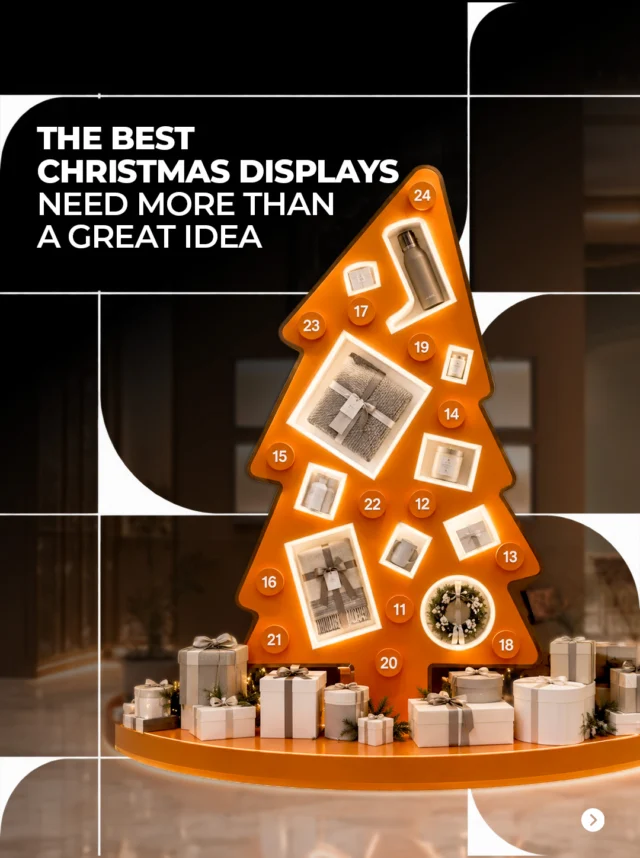
Messe Frankfurt’s August 2026 trend coverage points to soft illumination, transparent glass and metallic accents. Its Christmasworld “Light” direction also features matte silver, pale colors and organic shapes. Those ideas offer a useful starting point. However, a vase on a styled table faces different demands from an installation beside a busy store entrance. For retailers in Dubai and Abu Dhabi, the creative opportunity lies in translating that mood into something people can delightedly walk past, staff can maintain and brands can afford to operate.
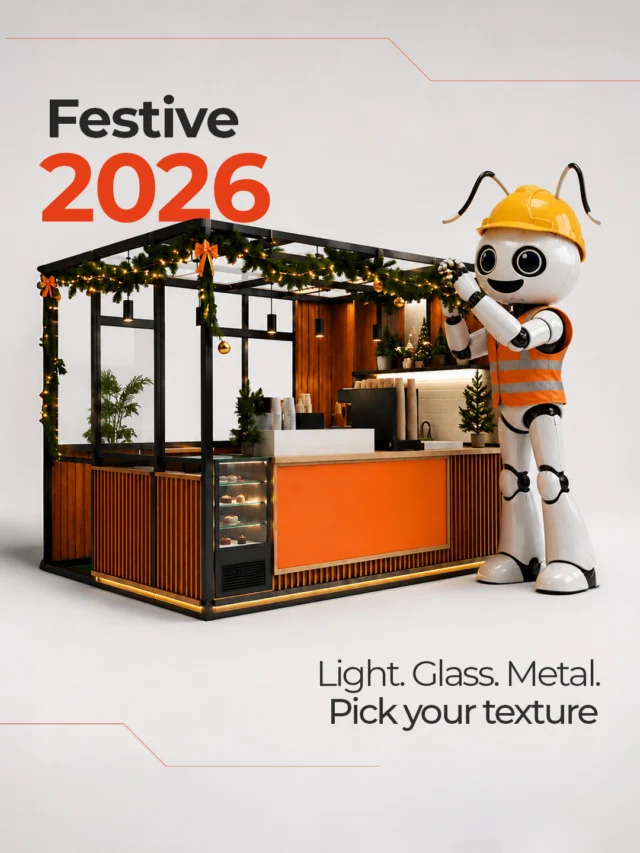
The moodboard reflects Christmas retail trends 2026. Now comes the harder question: how will it stand up in a real store?
Let Light Shape The Scene:
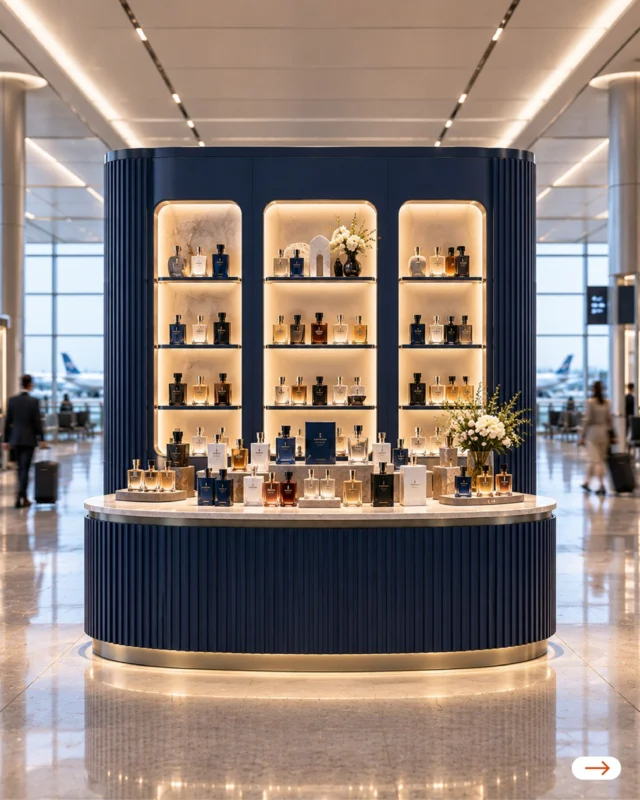
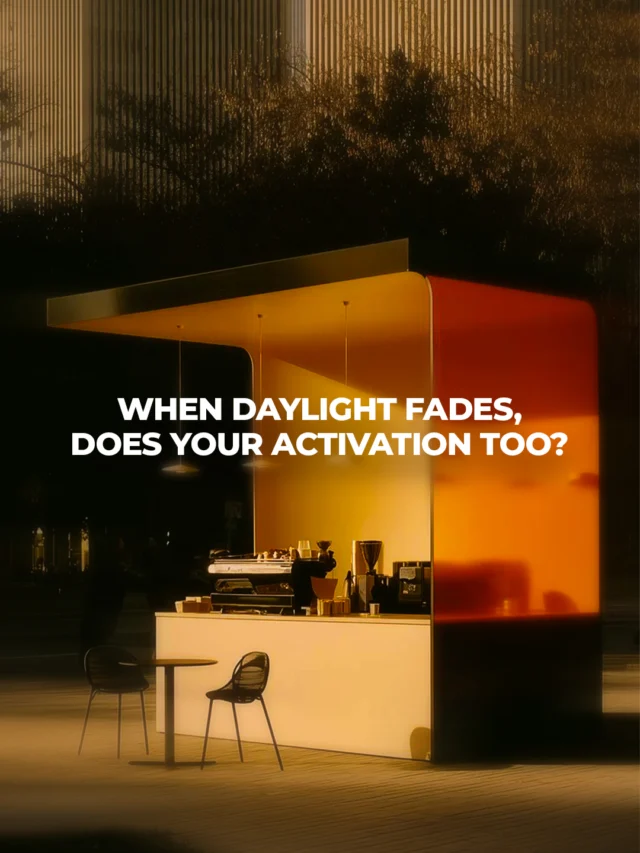
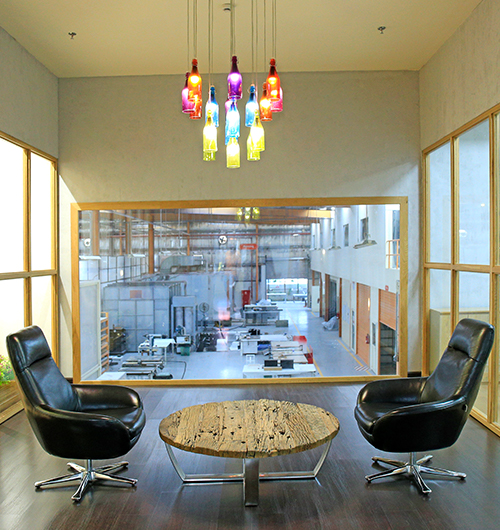
The strongest glow rarely comes from making everything brighter. A lit edge can define an arch; a warm pool of illumination can draw attention to a product; a dimmer backdrop can give both room to breathe. This matters especially in a UAE mall, where a window competes with bright corridors, neighboring storefronts and reflections on polished surfaces.
Start with the viewing point. What should a passerby notice from several meters away? What becomes clear only when they stop? That sequence helps determine where decorative lighting for retail belongs. A backlit panel may provide a gentle wash, while a narrow beam picks out merchandise. Too many bright elements flatten the scene and leave the products fighting for attention.
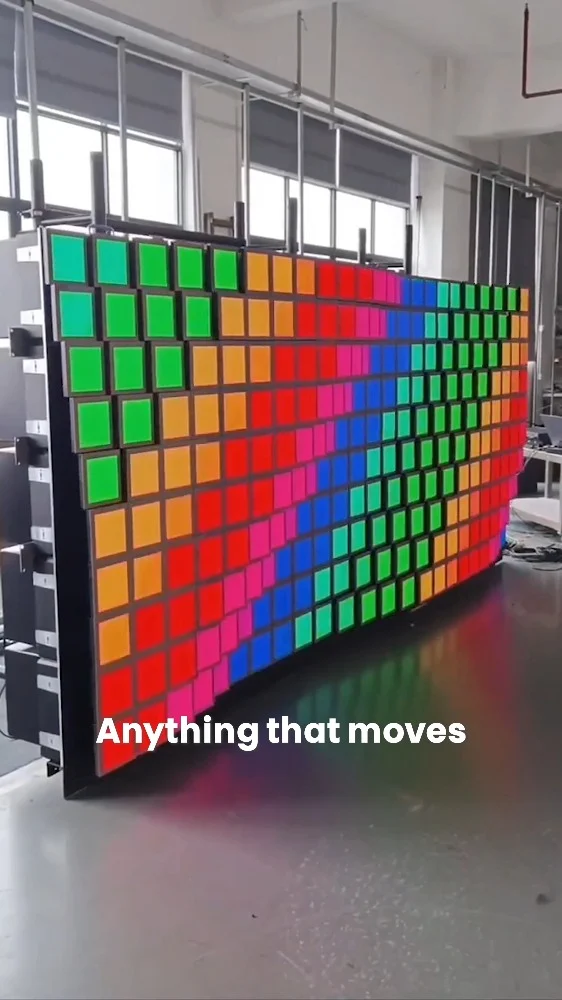
Next comes the less glamorous drawing: power. Mark each fixture, cable route, driver location and access point before approving the structure. Concealed wiring still needs to remain reachable for repairs. Removable panels should open without dismantling half the set. Specify the intended operating hours and arrange electrical review against the venue’s requirements, rather than assuming a component suited to a photo shoot can run throughout a trading day.
Finally, test the effect under real conditions. Samples viewed in a workshop can behave differently beside daylight, glossy floors or a neighboring sign. Check for glare from the shopper’s usual angle and ask whether reflective surfaces obscure labels or prices. The lighting succeeds when it creates atmosphere and makes the merchandise easier to see.
Make Sure The Material Suits The Setting:
Messe Frankfurt’s 2026 window guidance recommends mixing clear, matte and translucent surfaces to create depth while keeping products visible. It also suggests using glossy finishes selectively, so they act as focal points. That is a sound design principle, but material choice still depends on placement and handling.
Consider a suspended ornament above a window platform. Its appearance is only one part of the brief. The team must establish its weight, fixing method, clearance, reachability and how it will be removed. A transparent sheet near customers raises different questions from a protected element behind glazing. The appropriate material, thickness and fixing should follow a site assessment and any applicable mall requirements.
Metallic effects need similar judgment. Mirror finishes can create striking highlights, yet they also reveal fingerprints and may throw unwanted reflections across merchandise. Brushed or matte surfaces often offer a quieter contrast. A coated component may deliver the desired color without making every structural piece from the same material..
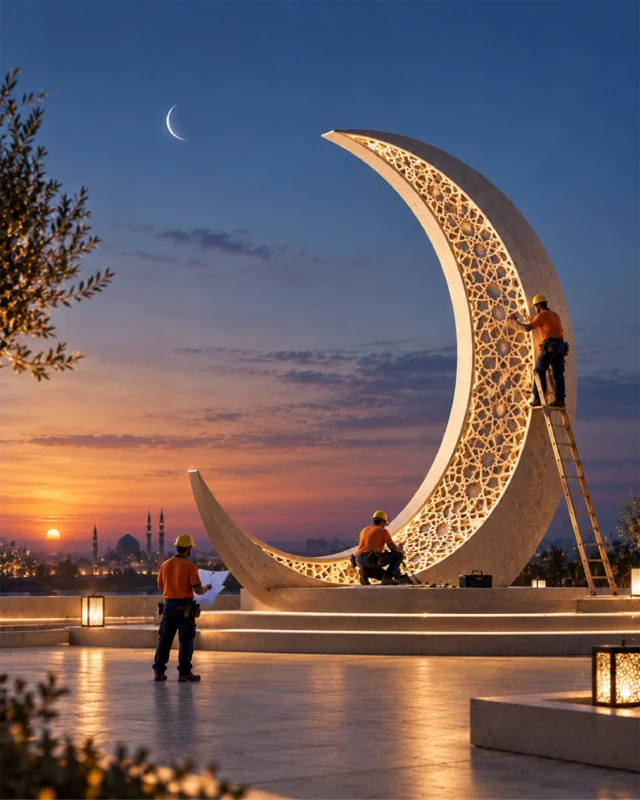
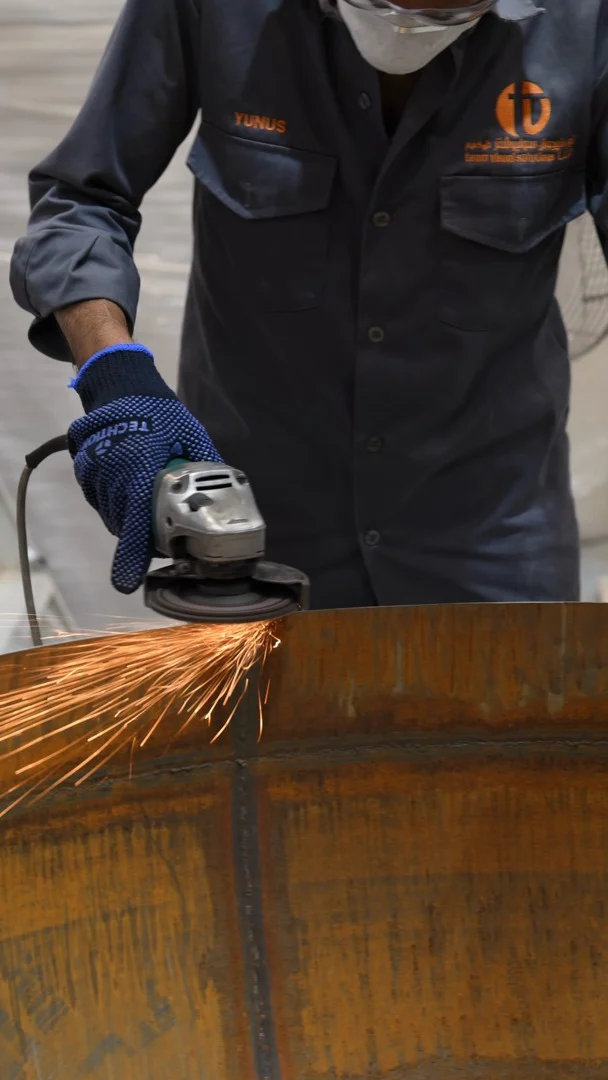
This is where retail display manufacturing becomes part of the creative conversation. A curved form must be made in sections that can travel through service doors. A slender frame still needs stable connections. Joints that appear invisible in a rendering have to be assembled by people working within a real access window. Good bespoke retail displays account for those limits early, leaving designers free to refine the visible details instead of rescuing them on site.
Consider The Store’s Daily Routine While Designing:
Once the visual language and materials are settled, follow the installation through a normal trading week. Can staff reach the shelves? Does the feature block a sightline to the entrance? Where will replacement stock sit? How will dust be removed from the highest surface? These questions can change dimensions more usefully than another round of color options.
Seasonal projects also benefit from a clear decision about lifespan. A four-week promotion may call for compact, easy-to-remove components. A feature intended to stay through several campaigns needs tougher finishes and a plan for changing graphics or merchandise. Modular pieces can serve both needs if their connections, storage space and future layouts are decided at the outset. Otherwise, “reusable” may simply mean that somebody keeps the parts in a storeroom.
Before fabrication, confirm site measurements, access times, loading routes and the permitted installation area with the venue. Then build a sequence: deliver, assemble, connect, inspect, clean and hand over. Include instructions for replacing lamps or panels and identify whom the store should contact if a fitting fails. In Dubai and Abu Dhabi, as elsewhere, the most elegant scheme is the one that still works after the installation crew has left.
That operational thinking is what turns festive retail displays into commercially practical spaces. It protects the shopper experience while giving store teams a feature they can actually manage.
Conclusion:
Light, transparency and metallic detail can give the 2026 season a distinctive look. Their value grows when the same care goes into power, structure, access and upkeep. A beautiful concept deserves a working life beyond the first photograph.
At Team Visual Solutions, we bring design, fabrication and installation together to help brands turn those ideas into workable spaces. If you are planning a seasonal window or a wider store feature, speak with us today.