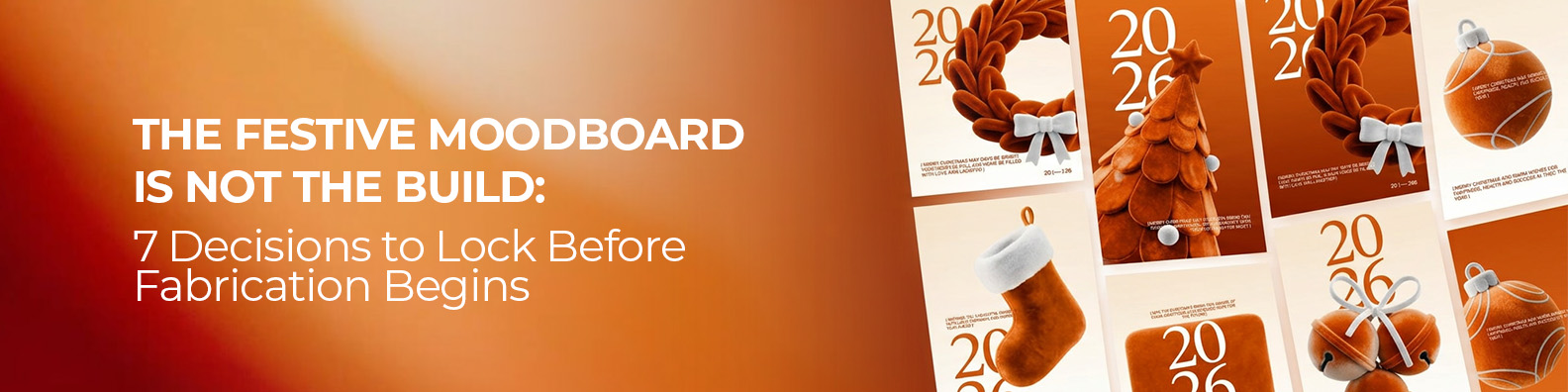
The Festive Moodboard Is Not The Build: 7 Decisions To Lock Before Fabrication Begins
What happens when a festive concept reaches the workshop and nobody has confirmed whether it fits through the loading door, where the power comes from, or how the finish will survive six weeks of footfall?
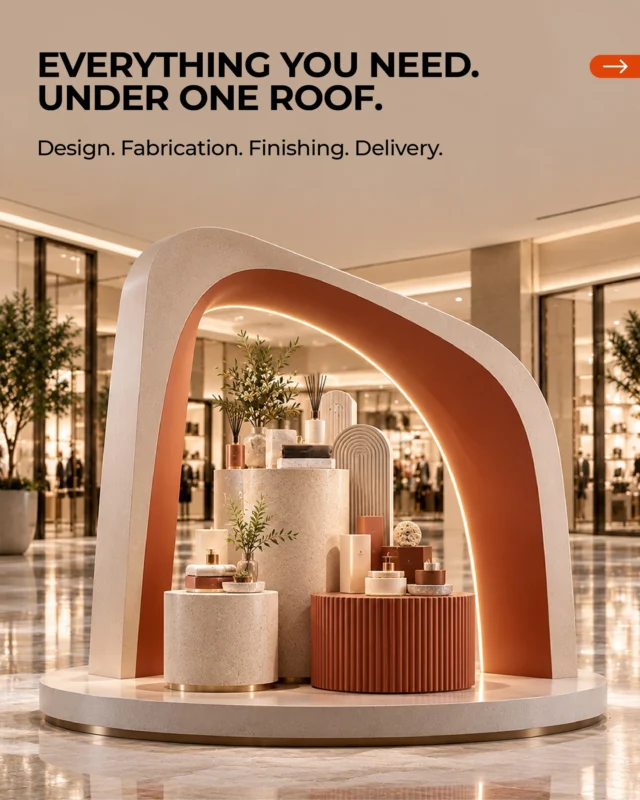
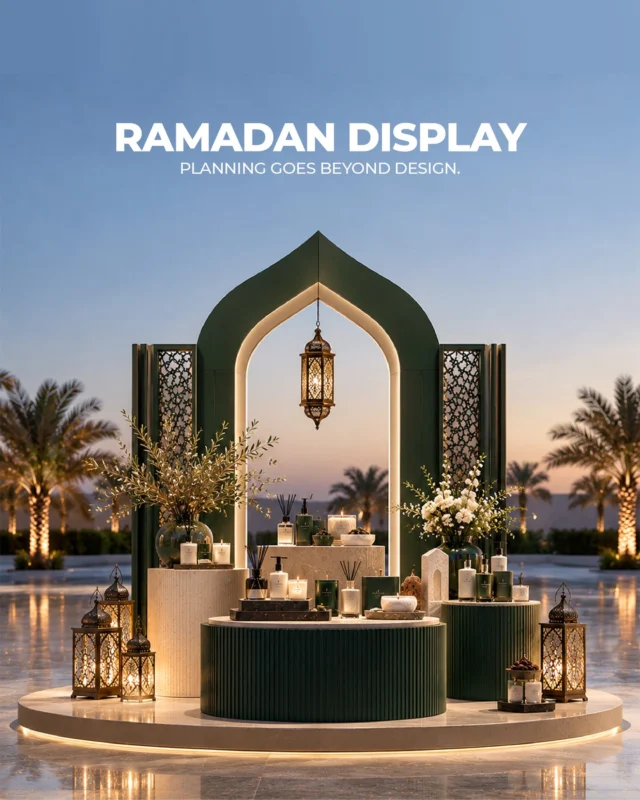
A seasonal installation has to do more than look impressive; it has to arrive, fit, function and remain presentable. For brands wondering how to plan a festive retail display, the real work begins long before production starts.
From Festive Concept To Fabrication: 7 Decisions To Finalize Before Production
- Freeze the real dimensions, not the dimensions assumed in the artwork.
A render may show perfect proportions while ignoring columns, skirting, sprinklers, ceiling drops, shutter lines or customer circulation. The production brief should include verified measurements, floor area, height restrictions, access clearances and key viewing angles. Measure the route into the venue too. A centerpiece that fits its final position but cannot pass through a service corridor is still the wrong size. For multi-location rollouts, record branch differences instead of forcing one drawing onto every site. This is the first step in turning seasonal retail displays in the UAE into buildable assets rather than attractive illustrations.For a rollout documented in Revit, keep each branch’s measured doorway widths, ceiling limits and access-route notes with the relevant views. A coordinator learning to work with those drawings can consult Revit Club’s modelling guides while preparing the survey information for the production brief.
- Choose materials according to location, lifespan and handling.
Material choice should answer three questions: where will the piece sit, how long must it last, and how often will people touch or move it? MDF may suit detailed indoor joinery, metal can provide strength with slimmer profiles, acrylic works well for polished translucent elements, while fiberglass can support sculptural forms. Outdoor or semi-exposed settings require attention to heat, dust, humidity, UV exposure and cleaning. At Team Visual Solutions, our capabilities include woodwork, metal and acrylic fabrication, fiberglass, painting, powder coating and large-format printing, allowing us to assess appearance and engineering together.
- Confirm power before adding illuminated features.
Lighting, animated elements, digital screens and motorized components need more than a note saying “LED here.” The brief should identify available supply, socket positions, cable routes, switching method, operating hours and system control. Concealed wiring also needs safe access for troubleshooting. Where several powered elements sit within one composition, the electrical plan should be reviewed alongside the physical framework so cables, drivers and access panels are designed in, not hidden later. Good festive display fabrication makes technology feel invisible while keeping maintenance straightforward. - Engineer support around weight, movement and public contact.
A tall arch, suspended ornament or oversized prop cannot be judged by appearance alone. The build team needs to know overall weight, center of gravity, fixing points, base dimensions, likely crowd interaction and whether the venue permits drilling or requires a self-supporting solution. Hanging elements need confirmed suspension locations and load approvals from the property or appointed contractor. Freestanding pieces should also be considered against accidental impact from trolleys, strollers or cleaning equipment. Structural thinking prevents late additions such as bulky bases or visible braces from changing the intended silhouette.
- Define the finish under the actual lighting conditions.
“Gold,” “glossy,” “mirror” and “premium” are not specifications. A proper finish schedule should identify paint reference, sheen level, laminate or film type, metallic effect, print method, edge treatment and sample approval. Mall lighting can alter metallic tones, flatten subtle textures or reveal imperfections hidden in the workshop. A physical swatch or prototype viewed under comparable illumination can prevent that mismatch. For festive retail displays, this matters because reflective ornaments, layered textures and branded colors often sit close together and are photographed at short range. - Plan maintenance.
The handover should explain how the installation will stay clean, aligned and operational throughout the campaign. Identify surfaces that show fingerprints, elements that may loosen, lighting components that can fail, removable parts needing storage and finishes requiring specific cleaning methods. Provide access without dismantling the entire structure. UAE business data also supports operational planning: the country’s non-oil PMI reached 55.3 in August 2026, while firms increased inventories and local purchasing to strengthen supply resilience. For seasonal activations, spare components, touch-up materials and clear responsibility can stop a minor fault from becoming a visibly tired centerpiece. - Account for installation from the outset, with clear timings and responsibilities.
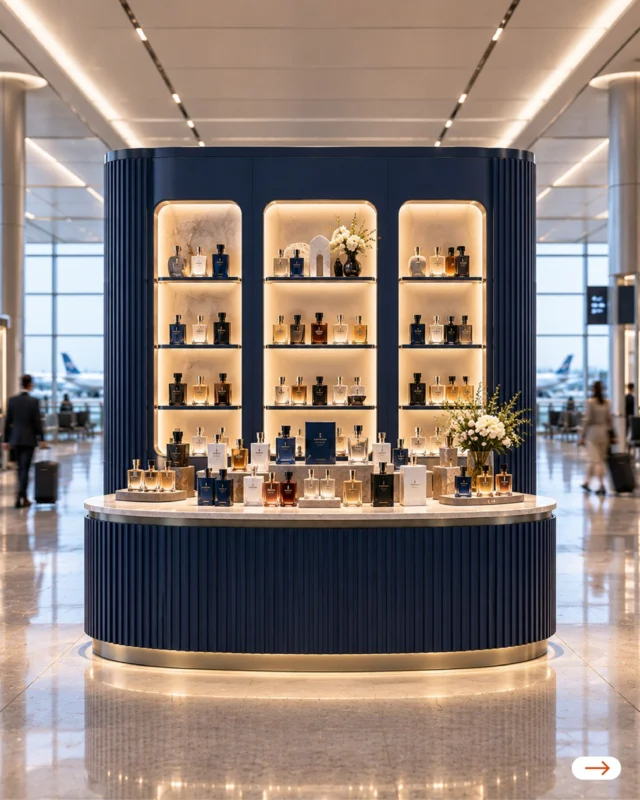
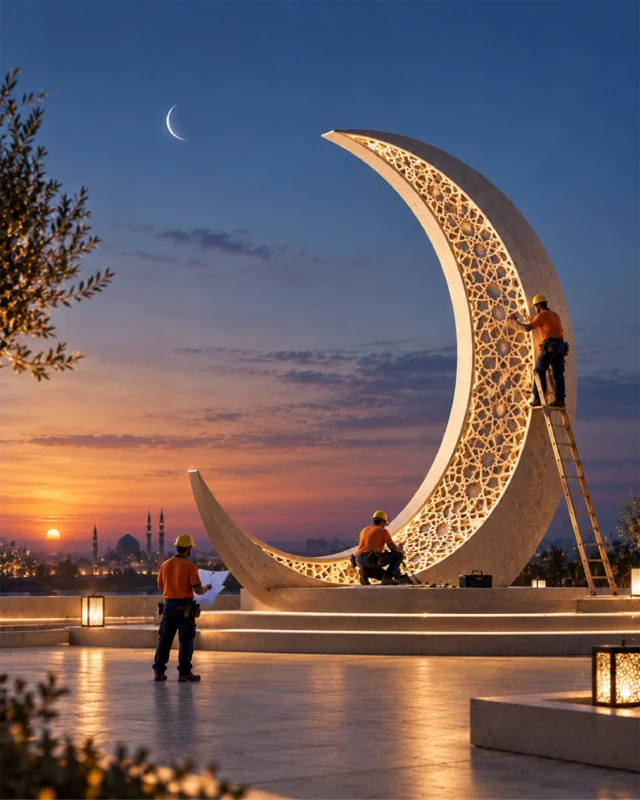
A strong festive display installation plan should map access permits, loading slots, crew requirements, tools, lifting equipment, floor protection, assembly sequence, testing, snagging and waste removal. In malls, airports and major venues, working windows can be narrow, so pre-assembly and labeling matter. Sequence matters too: electrical testing may need to happen before cladding closes, while delicate ornaments should arrive after heavy work is complete. At Team Visual Solutions, we manage projects from manufacturing through on-site setup, helping connect workshop decisions with the conditions teams face at the venue.
If the handover includes a Revit file, list the installation plan, sections and sheet numbers in the pack. The guide to finding and organizing views in Revit’s Project Browser explains how to locate views and sheets in the model. Include the approved drawing revision so the crew can identify the version intended for installation.
Conclusion:
A festive moodboard should inspire the build, not substitute for its technical brief. Once dimensions, materials, power, support, finishes, upkeep and installation are locked, creative ambition has a far better chance of surviving contact with the real site.
At Team Visual Solutions, we believe the best seasonal displays are the ones where creative thinking and production thinking begin together. If you are planning a festive activation in Dubai, Abu Dhabi or elsewhere in the UAE, speak with us early. We can help translate the concept into a practical, engineered and production-ready solution that arrives on site ready to perform.